Chapter 2 of 13 · 4 min read
Inflation
Why too much gold and too many magic items kill a campaign.
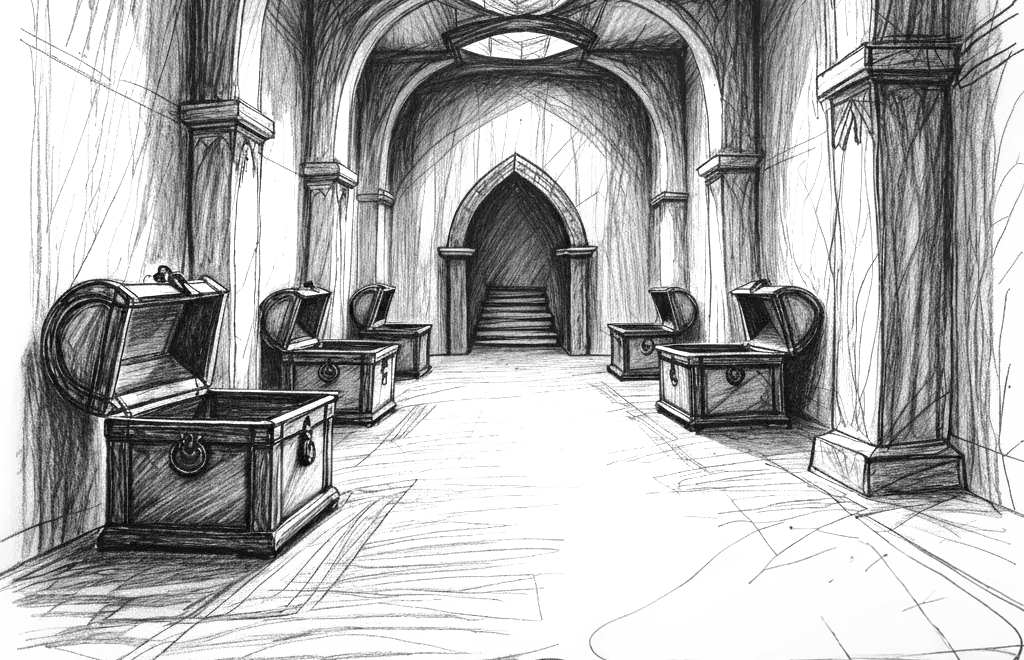
Let's talk about gold and magic items. New DNs love being generous. Who doesn't want to see their players' faces light up when they find a flaming sword or a chest of 10,000 gold pieces?
Here's the problem: You just broke your economy and your tension curve.
Why Gold Inflation Hurts#
Money matters when it's scarce. When players have 50,000 gold and nothing meaningful to spend it on, you've removed an entire pillar of decision-making. Should we buy the healing potion or save for better armor? Can we afford to bribe the guard? These questions disappear when everyone's swimming in coins.
Your party is third level. They defeat some bandits and you give them 2,000 gold. Now they walk into town, buy the best armor available, stock up on healing potions, bribe every guard they meet, and still have money left over. When they reach the dragon's hoard three levels later, the 5,000 gold feels like pocket change. You've taught them that money is meaningless.
Compare that to this. Same bandit fight, but they find 150 gold total, plus a silver locket worth another 50 if they can find the right buyer. Now in town, they have real decisions. The fighter can afford the chain mail upgrade OR a week at the inn OR a healing potion. Not all three. Suddenly they're planning, prioritizing, even arguing about group resources.
How to Fix Gold Inflation#
Make gold harder to transport. That bandit hoard of 5,000 copper pieces? That's 50 pounds of copper. Are they really carrying that out? Create meaningful gold sinks like titles that grant social access, bribes that open new quest lines, or rare services like magical identification. Remember that most NPCs have never seen 100 gold in one place, so let them react with awe, suspicion, or greed when the party flashes wealth.
Here's the real trick. If your players are broke, buying information from a street urchin costs them their lunch rations and maybe a promise to help the kid's sick sister. If they're rich, they toss a gold coin and move on. Which interaction was more interesting? Scarcity creates story.
Why Magic Item Inflation Hurts#
Every +1 sword you hand out devalues the next one. You end up in an arms race where you throw bigger threats at overpowered players, which makes the world feel video-gamey and absurd.
Level one, you give the fighter a +1 longsword because it feels cool. Level three, the paladin needs something equivalent. Level five, the original sword feels weak, so you upgrade it. Soon, everyone expects magical everything. Your goblins now need to hit harder to threaten them, so you're throwing hobgoblin champions at a party that should be fighting regular hobgoblins. The power curve spirals out of control.
How to Fix Magic Inflation#
Treat magic items like they're actually magical. Rare, named, and storied. When the party finds Whisperwind, the ancestral blade of the Thornheart family, that's an event. It has history. Maybe even personality. The fighter who wields it carries a legacy, and maybe someday the Thornhearts will come looking for their stolen heirloom. That's a weapon that matters.
Consider consumables over permanent buffs. A ring of Fireball is exciting and useful, but it's gone after three uses. Players love finding these because they feel powerful without permanently inflating the power curve.
Let players quest for specific items. If the wizard wants a staff that enhances ice magic, let them hear rumors of the Frost Sages in the northern peaks. Now you've got a side quest, some lore, a dungeon to explore, and at the end, a meaningful reward the player specifically wanted. That staff means something because they worked for it.
.
The Alternative Economy#
What if instead of gold and magic, you rewarded reputation? The party that saved the merchant's caravan gets recognized in every shop in the district. "Oh, you're the ones who fought off those bandits! Let me show you the good stuff I keep in the back." That discount is worth more than gold because it's personal.
Information can be treasure. Maps to hidden locations, secrets about NPC motivations, blackmail material, prophecies. When the party finds the old wizard's journal and learns that the kindly mayor is actually a shapeshifter, that's not gold and that's not a magic sword, but it just changed everything.
Resources tell stories. A loyal NPC who owes them a favor. A safe house where they can lie low. A trained animal. A boat that opens up coastal adventures. These rewards change what's possible, not just the numbers on the character sheet.
Story progress itself is reward. The real treasure was stopping the ritual before the demon manifested. The real treasure was saving the village. The real treasure was earning the king's trust so he'll listen when you warn him about the coming invasion.
Here's how this looks in practice. The party defeats a necromancer terrorizing a region. A generous DN gives them his treasure hoard: 10,000 gold and three magic items. A savvy DN gives them the village's gratitude, which means free lodging whenever they return, a contact who sends word when trouble brews, and a reputation that spreads. Three sessions later in a different city, someone recognizes them: "You're the ones who killed the Dreadmoor Necromancer! Please, we have a problem you might understand..." The reward from that first quest just generated a new quest hook organically.
That's an economy that doesn't inflate. It expands.