Chapter 5 of 13 · 3 min read
High Level Encounters
What an encounter really is, and how to threaten strong parties.
What an Encounter Really Is#
An encounter isn't just rolling initiative. It's any challenge that drains party resources. Combat against giants or dragons demands immediate resources. Hazards like traps, lava flows, and cursed zones force creative problem-solving or resource spending. Social trials - bargaining with demons, navigating a vampire court - test negotiation and sometimes expose weaknesses. Exploration challenges like forced marches, freezing weather, or food shortages grind down morale and supplies.
Each encounter nudges the resource dial down. Hit points tick lower, spell slots empty, potions get consumed, morale frays. Your role as DN is deciding how hard to push that dial.
Encounters at High Level#
By 7th through 9th level, a single monster falls fast to focused fire. That's expected and fine. Real challenge emerges from layering threats together.
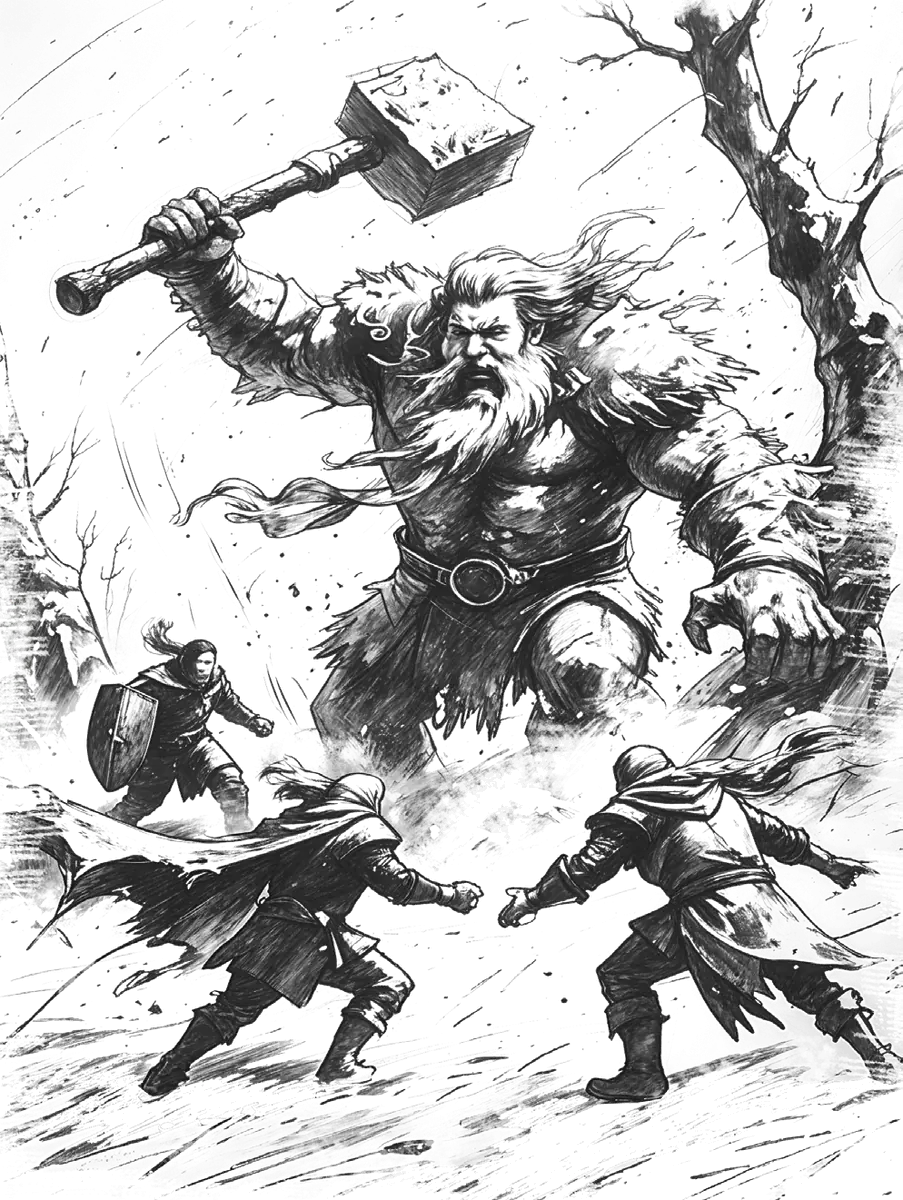
Multiple foes change the math entirely. A frost giant commanding two lieutenants and a wolf pack forces players to manage targets, not obliterate one thing. Layered threats hit differently too - giants hurling boulders while shamans cast hold person means players choose which threat to address first, and something always gets through.
Environmental strain adds pressure that numbers alone can't. Icy cliffs create positioning hazards. Avalanche risk forces saves. Exhaustion from harsh conditions compounds damage. Time pressure sharpens everything - when that ritual completes at dawn, there's no long rest to reset, so every resource spent now matters.
Your job at high levels isn't designing one unbeatable monster. It's combining threats so players feel genuinely stretched across multiple fronts.
The Real Killer#
Attrition is the slow bleed of resources across a day of encounters.
An ogre warband costs the wizard a spell use. A troll ambush forces the cleric to spend serious healing magic. A trap triggers and the thief takes 10 HP. None of these solo encounters should be lethal. But stacked together before a final rest, they create desperate circumstances.
By the time the party reaches the frost giant, they're half-spent. Even a fight many would rate "medium risk" becomes deadly when it's the fifth or sixth challenge of the day. This is where high-level play truly shines - it stops being about single battles and starts being about whether the party survives the entire gauntlet.
Think in Sequences, Not Singles#
Don't ask yourself: "Can this fight kill them?" Ask instead: "If they fight this, then that, then this other thing before resting, will they feel the pressure?"
Build your day as a chain. A warband skirmish burns basic resources. A dangerous climb forces fatigue saves and movement choices. A magic-draining zone strips spell flexibility. Then the boss fight hits when they're already compromised. Each link in the chain targets different resources so nothing feels random - it feels inevitable.
Mix Encounter Types#
Start with combat to establish stakes. Add a hazard that forces saves or clever thinking. Include exploration strain like weather or exhaustion. Drop social pressure where negotiation matters. Then return to combat when they're worn thin.
Variety keeps narrators engaged and prevents the "roll initiative, roll initiative, roll initiative" monotony. It also trains players to conserve different resources for different threats.
Give Signs of Strain#
Let players see the wear. Describe what exhaustion looks like. "Your shield arm trembles. Blood freezes in your gauntlets. The giant laughs, unhurt." Show scarring from earlier fights, dwindling numbers, hesitation where confidence existed before.
This builds mounting tension without fudging rolls. Players understand they're losing without feeling cheated.