Bringing Monsters to Life
Monsters are more than numbers on a page. Each creature in Open Dungeons has a stat block to guide play, yet their true power comes from the Dungeon Narrator's imagination. Every detail - from sharp teeth to a strange number of eyes - invites you to shape how they behave in the world.
What do they look like? Does their fur or hide blend into the environment? Are they scarred, diseased, radiant, or puzzlingly pristine?
How do they move? Fast and skittering? Heavy and lumbering with the sound of cracking stone? Drifting, floating, or phasing through shadows?
What stands out? Extra eyes or ears might reveal unseen threats or ignore stealth attempts. Oversized claws might break shields or leave jagged rents in stone walls. Strange colors or glowing organs might hint at venom, radiation, or magic.
Why do they fight? Hunger? Territory? Vile purpose? Self-defense?
Creatures behave with instinct or intent. Let those motivations guide their tactics.
Not every feature is written into the rules - and that is a feature, not a flaw. The art is part of the storytelling. If the illustration shows barbs along the back, a trembling jaw, or ritual symbols etched in bone, feel free to reflect those traits in your narration.
If a detail seems meaningful, you can apply it in a simple, fair way:
Grant a small bonus to perception when a creature has numerous sensory organs.
Give them an unexpected movement advantage if they appear agile or spider-like.
Describe elemental sparks or fumes as warning signs of what their attacks can do.
Let the environment respond to their presence - footprints that burn, whispers carried by wings, frost spreading along the cave wall.
You don't need new rules for every visual cue. A small threat can be terrifying if the narration carries weight.
Once you describe a trait, treat it as true. Consistency builds trust - and fear. If you decide the triple- eyed brute sees through shadow, players will remember that and adjust their tactics. You don't need to over explain it - keep details grounded in the moment.
Create encounters that feel alive.
A monster should inspire feelings - dread, panic, wonder, curiosity. Let their design fuel your creativity. Let their behavior show the players what they are dealing with. Even a simple beast can become unforgettable with the right imagination behind it.
Every monster begins as a shadow in the mind. Bring them to life.
In every dark thought, a creature waits to be named.
What you describe becomes real.
Level 10 is the highest level attainable in Open Dungeons. At this point, a character has reached the limits of mortal power. There are no more levels to chase. Advancement ends here, your character retires...unless your DN decides the character story does not end here.
Level 10 represents the end of mortal growth. It is the moment where a character becomes the strongest they can ever be in the Material Realm. But in truth, Ascension marks something far more significant. It is the point where mortal resonance presses against the limits of reality itself.
A character who reaches this height is no longer shaped only by the world. The world begins to shape itself around them. Their dreams may drift into the Ethereal World. Their instincts sharpen in ways they cannot explain. Strangers pause as if sensing something familiar within them. None of these signs are loud or dramatic, but they signal a growing pressure that a mortal life cannot hold forever.
For the DN, Ascension is not just a level up. It is the hinge between the mortal story and the mythic one. You decide how that moment reveals itself. It might erupt at once during a decisive victory, carried on a ripple of light or a sudden stillness that only the Ascended can fully perceive. Or it may unfold gradually, with no clear moment of change, only the quiet understanding that the character has stepped beyond what the Material Realm can comfortably contain. Some characters may resist it, trying to anchor themselves to the life they knew, but even resistance cannot stop what Ascension eventually requires.
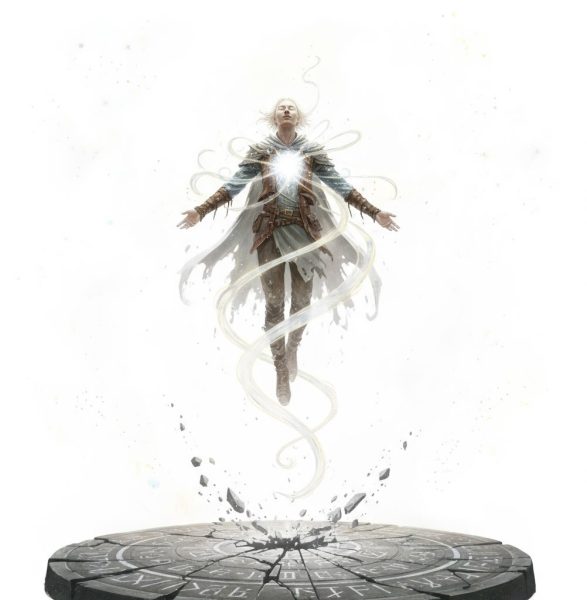
What an Ascended mortal becomes depends... . Many rise toward the Ethereal, their spirit half unbound from flesh. They remain present in the world, yet their steps carry weight in unseen places. They may encounter Gate Keepers not as distant watchers but as peers, or feel drawn to thresholds where Realms brush against one another. Over time, these figures often fade from the Material Realm, leaving behind only stories, relics, or rare moments where their presence is felt but not seen.
Others remain within the world and become something larger than a hero. A cleric might serve as the living voice of a deity within a single city, not a god themselves but the closest a mortal may come. A warrior might become a figure of fear and respect, a ruler who bends armies not with magic but with the sheer force of their presence. A rogue may disappear entirely from common sight, weaving influence across nations from shadows that only the wise know to fear. These Ascended do not leave the world; instead, the world begins to orbit them.
Ascension gives you several ways to conclude a character, group or campaign. A group may finish soon after reaching Level 10, their final deeds shaped by the gravity that now surrounds them. Others may take on one last great tale - a journey that feels mythic not because the numbers have grown, but because the characters themselves have become rare figures in the world. Or you may allow them a quiet ending, stepping into the unseen spaces between Realms where their stories continue in ways that no one else can follow.
Ascension is not a gateway to new power tiers or supernatural invincibility. The world remains dangerous. Dragons, old magic, and the anger of deities can still end an Ascended life. There are no new levels past ten, no new rules to complicate the system.
Ascension changes the story, not the mechanics. Ascended characters should not return as adventurers. Their time as heroes is complete. But they may appear as patrons, legends, quiet guardians of certain roads or ruins, or rare figures who offer guidance - or warnings - to new parties. Their echoes enrich the world without overshadowing those who now stand where they once stood.
The cause of Ascension is not a single force but a convergence of many. The cosmos does not choose a mortal, nor do the gods grant it as a blessing or curse. Ascension happens when the inner resonance of a character outgrows the boundaries of the Material Realm. Their will, deeds, experiences, and the weight of their story press against the limits of mortality until the world can no longer contain them. Some believe the gods take notice at this threshold, others claim the Ethereal naturally pulls such souls away, and a few insist that reality itself bends rather than break. But the truth is simpler: Ascension occurs when a mortal becomes too great for the shape they wear, and the cosmos - whether it wills it or not - must make room.
Ascension is the fullest expression of a mortal life. It marks the moment where a character's inner resonance becomes too great for the shape they have worn, and the DN decides where that resonance leads. Whether their end is triumphant, tragic, or quiet, Ascension is not about becoming more. It is about becoming final.
Power Surge
When a character reaches Level 10, they undergo a final transformation.
Restrictions Lifted
All armor and weapon restrictions are removed. Any class may wield any weapon or wear any armor. A cleric may march into battle in full plate. A wizard may stride forth in gleaming steel, channeling magic unhindered.
Surge of Vitality
The character's maximum Hit Points increase by 25% (round up).
Ability Elevation
All ability scores below 16 are raised to 16. Any ability score of 16 or 17 increases to 18.
Magical Backlash Immunity
Magical Backlash no longer occurs. Spellcasters wield magic without risk of catastrophic failure.
Masterful Competence
All Chance Rolls now have a Target Number of 5. All Save Rolls now have a Target Number of 5. Anyone who tries to cast magic on you or against you does not gain the level based negative roll against your Save Rolls. Their caster level gives no penalty to you.
Thief Mastery
All Thief skills (Backstab, Pick Locks, Remove Traps, Pick Pockets, Move Silently, Hide in Shadows, Climb Wall) succeed on a roll of 19 or less on 1d20 (95% success rate).
Initiative Supremacy
Any type of declared initiative will always favor the Apex Mortal.
Unarmed Combat Mastery
Each class gains a bonus to unarmed combat: DR does not apply.
Apex Abilities
Each class gains a unique capstone ability that activates instantly, usable once per day:
Wish Spell
Wizard - Wish Spell - The wizard may cast a Wish spell, reshaping reality within the bounds of mortal power. The Dungeon Narrator adjudicates if need be.
Divine Summons
Cleric - Divine Summons - The cleric can call upon their god for direct intervention with 100% certainty. Their deity's Aspect will either appear, or sends an Envoy of near-equal power.
Life Surge
Fighter - Life Surge - Even when reduced to 0 Hit Points or unconscious, the fighter may instantly restore themselves to full Hit Points. This ability can bring them back from the brink of death.
Vanish
Thief - Vanish - You disappear from the encounter entirely. Not invisible. Not hidden. Removed. You reappear 1 hour later up to 3 miles away, at half your maximum Hit Points restored.
You don't need to build the world all at once. The world already exists - your players are simply walking through the part they can see.
Start small: a village, a temple, a ruin. Give each place one detail that breathes - a scent, a sound, a secret. Let the rest unfold naturally when the players turn toward it. The world should feel larger than what's described, but never heavier than what the table can carry.
When you invent something on the spot, don't chase perfection - chase consistency. Once you name a place, person, or god, anchor it in tone and consequence. If the players meet a fisher who worships the Tide Mother, that god now exists. Let her name echo in prayers, murals, or distant shrines. Small ripples make deep worlds.
Worldbuilding is not a lore dump - it's a rhythm. Reveal, withhold, reveal. What the players don't know yet is the most powerful tool you have.
Your goal isn't to design a universe - it's to maintain illusion of continuity. When the players ask about the far north, you don't need a map - you need a reason they might want to go there.
For Further Understanding
To truly grasp what it means to be a Dungeon Narrator, nothing teaches faster than play itself. Consider running the free adventure from Open Dungeons™ - Echoes Beneath the Stone.
This short introductory quest leads a new party through the essentials of exploration, tension, and consequence. It's written to highlight pacing, reward, and the balance between mystery and clarity - the very principles in this guide. Run it once by the book.
Then run it again, your way - learning how to make the same world feel alive twice.
Not all treasure shines the same way to every hero. A swordsmith sees perfection in steel; a cleric sees sanctity in relics; a thief sees opportunity in anything not nailed down. The Dungeon Narrator should think of treasure as character-specific myth - rewards that echo a class's nature, not a table of random gold.
Treasure should speak to who the heroes are, not just how strong they've become. Each class interprets value differently: fighters crave tools of conquest, thieves admire the rare and forbidden, wizards hunger for forgotten insight, and clerics seek proof of their faith.
Class Tuned Rewards
Fighter (Ranger, Knight, Paladin, Barbarian): Favored Treasures: Fine weapons, ancestral arms, armor that bears history.
Hooks by Subclass: Ranger: Trophies of the hunt, weapons carved from the beasts they've slain.
Knight: Heraldic relics, tokens of honor, blades bound by oath.
Paladin: Holy arms, relic armor blessed by divine resonance.
Barbarian: Totems of battle, beast hides, weapons forged in storms or blood..
Thief (Rogue, Bard, Assassin): Favored Treasures: Jewels, unique trinkets, items of charm or deception.
Hooks by Subclass: Rogue: Lockpicks of legend, daggers with whispered names, shadow-slick coins.
Bard: Instruments of myth, stories etched in gold or song.
Assassin: Blades of silence, vials of perfect poison, disguises from forgotten guilds.
Cleric (Druid, Witch, Warlock, Monk) Favored Treasures: Relics, blessings, natural wonders.
Hooks by Subclass: Druid: Seeds of eternal bloom, living stones, relics born of the wild.
Witch: Charms, bones, moonlit artifacts that remember secrets.
Warlock: Pact tokens, cursed relics, objects branded with their patron's sigil.
Monk: Symbols of enlightenment, sacred beads, relics found through trial and silence.
Wizard (Sorcerer, Alchemist, Enchanter) Favored Treasures: Tomes, crystals, arcane focuses.
Hooks by Subclass: Sorcerer: Relics infused with bloodlines, elemental fragments.
Alchemist: Bottled spirits, eternal metals, philosopher's residues.
Enchanter: Living charms, bound memories, mirrors that dream.
Treasure by Context
After a major class triumph, tailor the reward to the hero's nature.
A Fighter might uncover a weapon steeped in legend; a Thief could unearth a relic from forbidden hands; a Wizard might awaken a crystal that hums with their name; a Cleric could receive a blessing carried by faith or fate.
Keep gold secondary. Wealth supports adventure - it doesn't define it.
Rotate the spotlight: not always, but try to ensure each player gains something that reflects their calling and deepens their myth.
Avoid symmetry. Not all heroes find treasure at the same time - the uneven rhythm of reward makes the world feel alive and real.
All that exists - seen or unseen - belongs to the Realms, the great structure of creation that binds every power, spirit, and soul. The Realms are not separate universes but layers of one existence, each resonating at different frequencies of reality itself.
At the center lies the Material Realm, where mortals live and shape destiny. Surrounding it flows the Ethereal World, a misty membrane between all things. Beyond stretch the Countless Realms - home to gods, demons, forgotten powers, and stranger things still.
Though mortals speak of "upper" and "lower," these are convenient lies. There is no heaven above or hell below. There is only resonance - states of being defined by intent, truth, and the nature of existence itself.
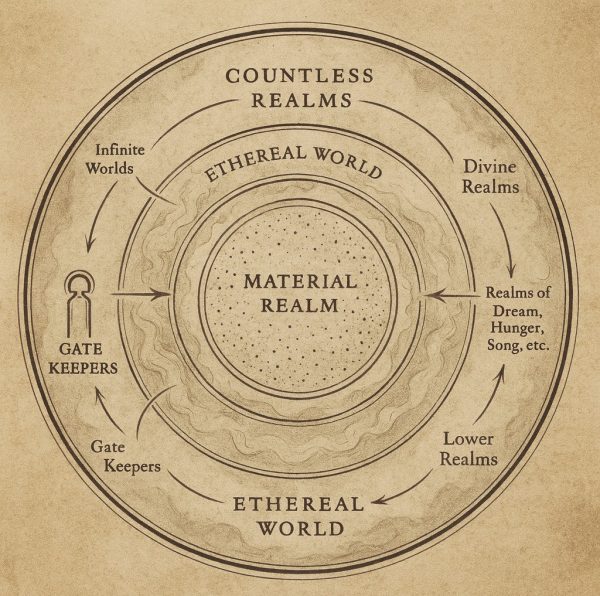
The Material Realm is not one world but infinite worlds.
Every campaign setting exists here. Every planet, every kingdom, every dungeon and distant shore. From mist-shrouded domains of horror to sun-scorched wastelands where demirealms lie, from your homebrew kingdom to any world borrowed from myth or legend - all of them exist within this central sphere of reality.
These worlds are separated by vast cosmic distances, magical barriers, or simply the membrane of the Ethereal itself. Some are connected by portals, ley lines, or ancient vortexes. Others remain isolated, known only to their own inhabitants. A party traveling through a portal from their home world to a realm of eternal twilight is moving laterally within the Material Realm - hopping between worlds, but never leaving the sphere itself.
The Material Realm is where physics holds sway, where cause and effect govern most outcomes, where mortality binds every soul to flesh and time. It is the stage upon which all mortal drama unfolds.
The Material Realm is your playground. Every world you create, every setting you borrow, every plane of existence your players visit during their adventures - if it has solid ground, breathable air, and follows the basic rules of reality, it belongs here. The beauty of this structure is that you're never locked into one cosmology. Your world can exist alongside countless others, and your players can discover connections between them if and when you choose.
Demirealsm
Demirealms are self-contained pockets of reality - fragments where the Material and Ethereal overlap. They obey most physical laws but are tinted by dream, magic, or divine influence. A demirealm might be a scorched desert always high noon, a haunted fortress that drifts in mist, or a valley where time slows because a god once died there. These places are real; their boundaries can shift too, and their rules can bend. Some persist for centuries, others dissolve when the will or power sustaining them fades.
For the Dungeon Narrator: demirealms are tools - bridges between the known world and the mysteries beyond. They let you stage planar stories without leaving the Material entirely. A demirealm can feel familiar yet uncanny: a world-within-the-world where the laws of resonance, emotion, or intent briefly take precedence over physics.
The Ethereal World
Surrounding the Material Realm on all sides flows the Ethereal World - a weightless, shifting veil between realities. It is not a realm of its own so much as the medium that separates and links all others, like an ocean surrounding islands of existence.
The Ethereal is where thought, memory, and dream have physical presence. Landscapes form and dissolve according to will, fear, and emotion. A traveler walking through the Ethereal might see ghostly echoes of the Material world, half-formed nightmares drifting past, or crystallized memories from civilizations long dead.
Magic flows through the Ethereal like blood through veins. When a wizard teleports, their body dissolves into mist and crosses this boundary before reforming elsewhere. When a soul dies, it drifts through this space before reaching whatever lies beyond. When a cleric calls upon divine power, the prayer travels through the Ethereal before touching their god's domain.
The Ethereal touches every realm - Material, Divine, Lower, and all the Countless places between. It is the path that allows spirits, magic, and travelers to cross between realities.
And within the Ethereal dwell the Gate Keepers.
Astral Travel
Some call the higher reaches of the Ethereal the Astral. Here, distance and gravity lose meaning, and motion is guided by will alone. Travelers drifting in this space describe it as endless silver mist or a sea of slow stars - a current of pure thought connecting all realms.
To journey "astrally" is to move not through matter but through intent, sailing the upper layers of the Ethereal where the mind becomes the vessel.
The Gate Keepers
Ancient custodians beyond mortal comprehension, the Gate Keepers exist within the Ethereal World, stationed where the boundaries between realms grow thin.
Each Gate Keeper embodies a threshold - not merely a physical gateway, but a metaphysical junction. Life and Death. Sleep and Wakefulness. Form and Spirit. Time and Eternity. Ignorance and Revelation. Dream and Waking. Truth and Illusion.
Their purpose is not to forbid passage, but to test the readiness of those who would cross. They are neither good nor evil - their duty is equilibrium. Some manifest as radiant beings of geometric perfection; others appear as monstrous reflections of fear, doubt, and consequence. Many take no visible form at all, existing only as pressure, as presence, as the sense that you are being weighed and measured by something vast.
Passage through a Gate Keeper requires more than strength. It demands alignment of intent, understanding of the realm you seek to enter, or simply the resonance necessary to survive what lies beyond. A soul bound for the divine halls must carry enough faith, virtue, or favor to pass the threshold. A mortal seeking to enter a realm of pure chaos must prove their will can endure the dissolution of form.
Some Gate Keepers are visible only in dreams. Others appear at sacred places, or in moments of death, resurrection, or teleportation gone astray. Most mortals will never knowingly encounter one - but every spell that crosses planes, every soul that departs the body, every journey into the realms beyond passes through their unseen judgment.
For the Dungeon Narrator: Gate Keepers do not exist to block travel, only to preserve balance. They are the invisible custodians ensuring that when a soul, spell, or traveler crosses between realms, the transition doesn't tear them apart. In most cases - teleportation circles, divine spells, planar portals, or astral projection - the required resonance is already provided by the magic itself. The spell, relic, or deity guiding the passage acts as the "key," allowing the Gate Keeper's judgment to pass silently. The players might sense a fleeting pressure, a whisper of awareness, or a shimmer in the air, but their journey continues unhindered.
Gate Keepers become active only when a crossing is unsanctioned or unsafe - when a mortal attempts to move between realms without proper resonance, faith, or preparation. Even then, the encounter is not a barrier, but a moment of revelation. It may manifest as a vision, a question, or a symbolic trial that defines what kind of traveler the character truly is. The purpose is to make planar travel feel profound, not punitive. The cosmos acknowledges their passage, but does not deny it unless they themselves are not ready.
Gate Keepers should feel rare, significant, and unsettling when encountered. They are not combat encounters (though they can become one if a player foolishly attacks). They are tests, riddles, or moments of cosmic reckoning.
A Gate Keeper might ask a question that has no right answer, only a true one. They might reflect the worst fears of the person trying to pass. Or they might simply observe, allowing passage to those whose souls resonate correctly - and barring those who do not. Use them sparingly, but make them memorable.
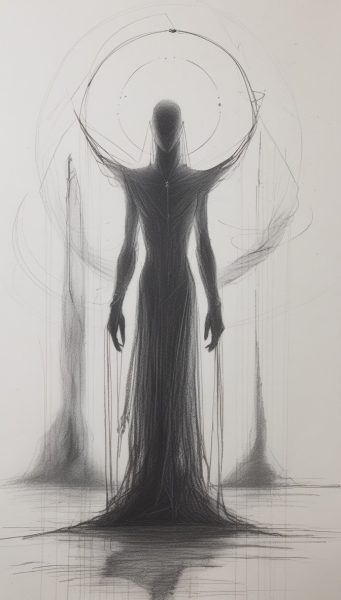
Countless Realms
Beyond the Ethereal lie innumerable planes - some vast and eternal, others fleeting as a half-remembered dream.
Mortals call some of these the "Divine Realm" and others the "Lower Realms," but these are crude labels born from limited understanding. In truth, there is no ladder between heaven and hell. There are only states of resonance, layers of existence defined by their nature, their intent, and their relationship to truth itself.
The realms mortals call "upper" tend to be radiant, ordered, creative - places where belief shapes reality and divine will manifests as law. The realms mortals call "lower" tend to be shadowed, consuming, chaotic - places where hunger devours form and corruption spreads like rot.
But even this binary is a lie of convenience. Between these extremes exist countless other realms that defy easy classification.
All Mythologies Are True: In your game, every deity that has ever been worshipped - whether in mythology, in other game systems, or in your own imagination - exists somewhere in the Countless Realms. Thor and Zeus can both be real. Anubis and Hades can both rule domains of the dead. Your cleric can serve a god from Greek myth while the party's paladin follows a deity from your homebrew pantheon. They simply dwell in different corners of the infinite divine expanse. This gives you total flexibility - pull from any source, mix and match, or invent your own. The cosmology supports it all.
The Realism Gradient
The Material Realm sits in the middle - balanced between the two extremes. Cause and effect govern most outcomes here. Physics holds sway. A sword cuts because it is sharp, not because you believe it should.
But as you descend into the Lower Realms, reality becomes even more rigid, more bound to suffering and entropy. Stone grows heavier. Darkness becomes tangible. Hunger is not metaphor but law. The deeper you go, the more the world resists change, resists hope, resists anything but slow collapse.
And as you ascend into the Divine Realms and beyond, reality becomes fluid. Intent shapes form. Truth manifests as light. A god's word becomes law not because of force, but because their will resonates so powerfully that the realm itself agrees. Mortals who venture too far into these places find themselves unraveling - their thoughts solidifying into landscapes, their fears and hopes taking shape around them, time losing meaning as past and future blur together.
This is why the Gate Keepers test travelers. Not every soul can survive the shift in resonance. A mortal crossing into a realm of pure divine law might find themselves judged by their every thought. A traveler descending too deep into the Lower Realms might discover their body growing heavier, their hope dimming, their very will to continue fading under the weight of that place's nature.
The Ethereal World is the buffer - the place where this gradient can be felt and navigated. It is why magic flows through it, why souls travel within it, and why the Gate Keepers dwell there, ensuring that only those who can endure the shift are allowed to pass.
When Do Realms Matter?
For most campaigns, the Realms are background cosmology - the structure that explains where divine magic comes from, where souls go when characters die, and why certain spells allow planar travel. Your players don't need to understand the full structure unless they start asking questions or their adventures take them beyond the Material world.
The Realms become important when:
- A character dies and their soul must travel to their deity's domain
- The party attempts planar travel or uses teleportation magic
- A cleric performs a resurrection or speaks with their god
- The story involves demons, celestials, or other extraplanar beings
- The players discover a portal to another world or plane
- You want to introduce cosmic stakes - wars between gods, breaches in reality, or threats that span multiple realms
Movement Between Realms
Lateral Movement (Within the Material Realm): When characters use a portal, ley line, or vortex to travel from one world to another within the Material Realm, they're moving horizontally through the Ethereal. This is relatively safe - the destination is still Material, still bound by physics and mortality. The journey might be disorienting, but it won't unmake them.
Resonance Shift (Leaving the Material Realm): When characters attempt to leave the Material Realm entirely - entering a god's domain, descending into the Lower Realms, or venturing into one of the Countless Realms - they must pass through the Ethereal and, potentially, encounter a Gate Keeper. This is dangerous. The resonance of the destination realm might be incompatible with mortal existence. This is why powerful spells exist - they allow the caster to navigate the Ethereal safely and arrive at a compatible destination.
While this guide doesn't prescribe a specific pantheon, the multirealms is vast and every deity that has ever been worshipped - whether in legend, myth, or tale - exists somewhere within it. When a cleric calls upon divine power, they're channeling the will of something greater.
Your world can draw from any source of divine inspiration. Ancient mythologies, forgotten gods from obscure traditions, or deities from other game worlds you've enjoyed - they're all fair game. If a player wants their cleric to serve Thor, a invented harvest goddess, or even a deity from another game system they love, the answer can be "yes."
What does their deity value? Honor, knowledge, nature, trickery, death, life? How does worship manifest? Daily prayers, acts of service, spreading the faith? What would displease their god? Breaking oaths, destroying nature, showing mercy to enemies? What boons or trials might their deity send? Divine visions, tests of faith, miraculous interventions?
The beauty of keeping deities open is that your table becomes a melting pot of divine concepts. One cleric might serve a stern god of justice while another follows a mischievous trickster. Let your players bring their favorite divine concepts to life, and weave those threads into your world's fabric.
Remember: Gods are powerful, mysterious, and rarely straightforward. Even good-aligned deities might ask difficult things of their followers. The divine operates on scales mortals struggle to comprehend.
Bring Your Adventure to Life
Ready for a tale of demonic possession, undead hordes, and a quest that will lead into the heart of an unforgiving desert? Meet your antagonist: a gnome farmer who discovers an amulet of untold power in the river's depths. Tempted by its allure, he becomes a vessel for a malevolent demon, and dark energies ripple through the land, summoning the dead.
Your adventurers must confront and subdue the farmer, face the risen undead, and claim the amulet. Their journey then leads across rolling hills into the desert, where an ancient ruin swallowed by shifting sands holds the amulet's true resting place. Along the way they'll battle both natural and supernatural foes until they uncover whether the curse can be broken and peace restored.
Finally, always remember: scale your challenges to the party's level. Make sure each encounter, trap, or mystery feels like a step toward resolving the core problem.
Two Sentences Adventures Example
The Vanished Village
Problem: An entire village disappears overnight.
Resolution: The adventurers must track the missing villagers to a hidden cavern and bring them home.
The Poisoned Well
Problem: The town's only well turns toxic overnight, and those who drink from it grow violently mad. Resolution: The adventurers must descend into the well's depths and destroy the corrupted water elemental lurking below.
The Drowned Cathedral
Problem: A sunken cathedral rises from the lake after a hundred years, and the dead priests inside seek vengeance on the descendants who abandoned them.
Resolution: The adventurers must enter the flooded halls, confront the wrathful spirits, and consecrate the altar before the cathedral sinks again at dawn.
The Drowned Armada
Problem: A fleet of ghostly warships rises from the ocean depths each night, attacking coastal villages and dragging ships beneath the waves to join their cursed crew.
Resolution: The adventurers must board the flagship during its nightly rise, battle through the drowned sailors and their spectral captain, dive to the sunken treasure hoard that binds them to the mortal world, and destroy the cursed admiral's crown before the entire fleet becomes powerful enough to march on land.
The Shattered Moon
Problem: A piece of the moon breaks off and plummets toward the world, threatening catastrophic impact.
Resolution: The adventurers must ascend to the Astral Plane, find the ancient titan responsible, and force it to restore the celestial body.
The Lich's Bargain
Problem: A lich ended a devastating war in exchange for the king's firstborn child, and now the king wants to break the pact.
Resolution: The adventurers must storm the lich's hidden sanctum and destroy the artifact binding its immortal soul before the child is claimed.
The God Who Forgot
Problem: A god loses their memory and wanders the mortal realm, causing reality to warp and fray wherever they go.
Resolution: The adventurers must restore the god's divine essence by collecting fragments of their power scattered across multiple planes.
How to create an adventure.
Step One: Ask Two Questions
Every adventure begins with just two sentences: What's the problem? How is it resolved? Write one sentence for each. That's your skeleton.
Step Two: Add Flesh
With your problem and resolution in hand, start adding the muscles and skin: encounters, NPCs, traps, maps, and locations. Some detail should connect back to either the problem or the resolution, but always making the journey challenging.
Example:
Problem: A farmer wears a cursed amulet and becomes possessed, raising the undead. Resolution: The adventurers must return the amulet to its resting place. From that seed, you already have a quest: confront the farmer, deal with undead, recover the amulet, travel to a desert ruin, and return it to break the curse.
Step Three: Scale to the Party
Add details suited to the group's level - weak skeletons for beginners, or giant desert scorpions and hordes for veterans.
That's It.
Two questions, two sentences, and you have the foundation of an adventure.
From there, go deeper - add maps, encounters, NPCs, monsters, traps
Even though mindless undead like zombies or skeletons have no Intelligence or conscious thought, the Save Roll system in OD represents magical resistance or spiritual recoil, not mental reasoning. So a WIS Mind save isn't about thinking, it's about whether the magic "takes hold" of their animating essence.
Mindless undead do not think, but they may still roll WIS Mind saves when affected by magic targeting their animating essence or spiritual presence. This represents the strength of necromantic energy, not mental reasoning.
When a spell lists duration as "plus X minutes per caster level," this refers to your current level, so adding from earlier level advancement applies.
Example: A 3rd level spell, Arcane Refuge you obtain at 3rd level states: "Duration: 15 minutes, plus 5 minutes per caster level." So at 3rd level it automatically protects you for 30 minutes (15 minutes + 3rd level).