Optional Reading
In Open Dungeons™, alignment does not apply to player characters. You have full agency to
decide how your character thinks and acts in the world. No chart, grid, or label can dictate your
choices - your character's morality and personality are entirely yours to roleplay.
For the World:
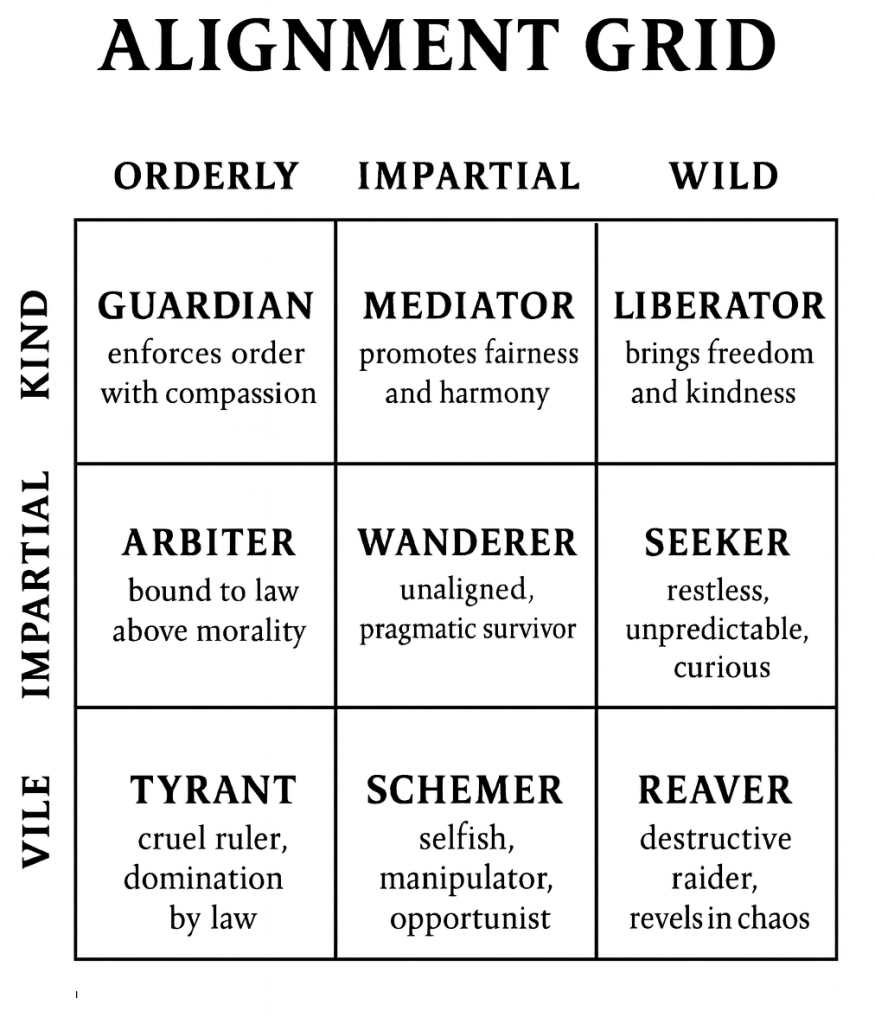
Alignments exist to describe how races, cultures, factions, and monsters are generally viewed.
It is not an absolute law - individuals may differ - but it provides a shorthand for how most of the
world understands a group’s tendencies.
There will always be exceptions, but the value of alignment lies in agreement. If you mention a
demon in conversation, nearly everyone shares the same expectation of cruelty and danger. If
you mention a unicorn, the same agreement exists around purity and kindness. Alignments are
the cultural shorthand that makes those assumptions possible.
Laws and Structure
This is about how a creature relates to rules, order, and authority.
Orderly: Respects hierarchy, routines, or natural laws. These creatures thrive in systems and usually enforce rules.
Impartial: Indifferent to laws or rules. They follow them when convenient, ignore them when not.
Wild: Rejects laws and structure outright. These creatures value freedom, instinct, or chaos above imposed order.
Treatment of Others
This is about how a creature values or disregards the well-being of others.
Kind: Respects life, acts with compassion or mercy, even toward enemies.
Impartial: Neutral toward others. Neither kind nor cruel; decisions are pragmatic or situational.
Vile: Disregards life, thrives on cruelty, selfishness, or malice. Others are tools, prey, or obstacles.